
Last updated November 22, 2026
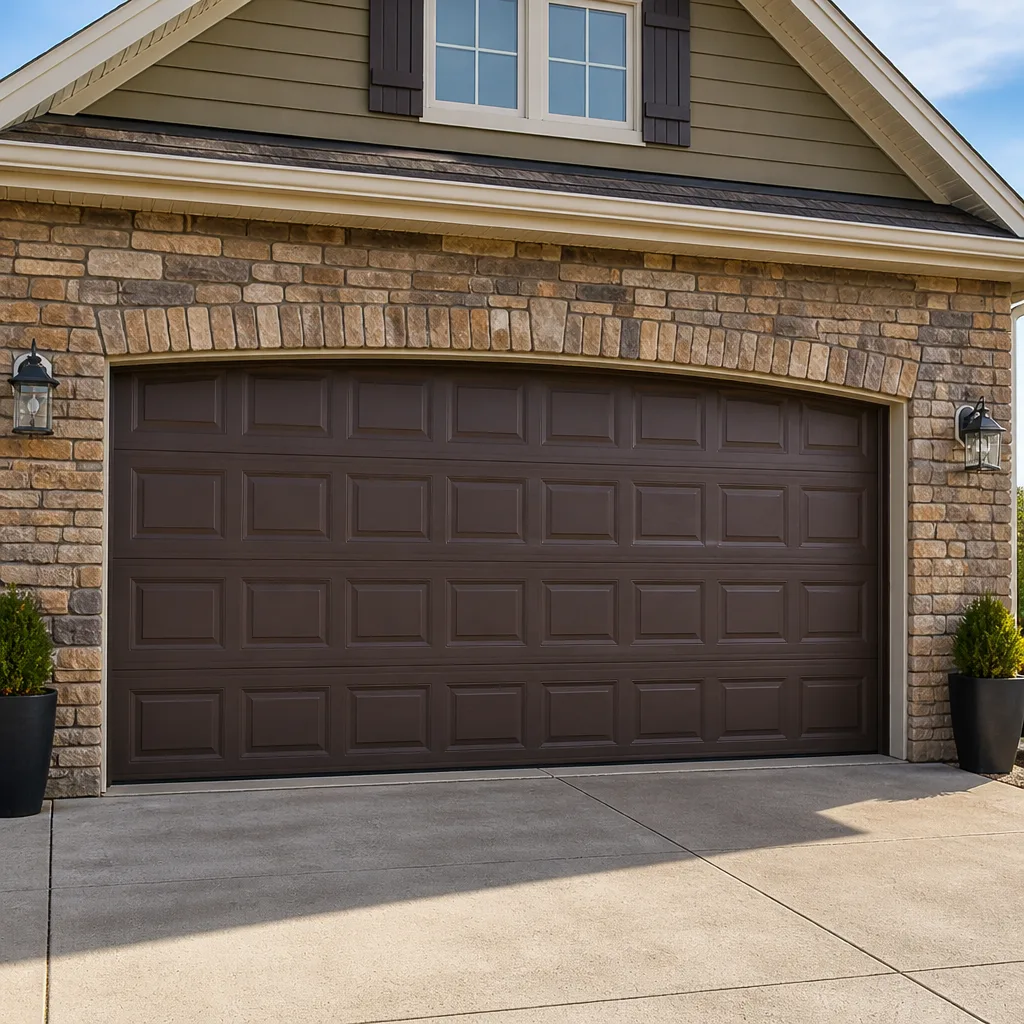 Raised-panel steel
 Carriage house
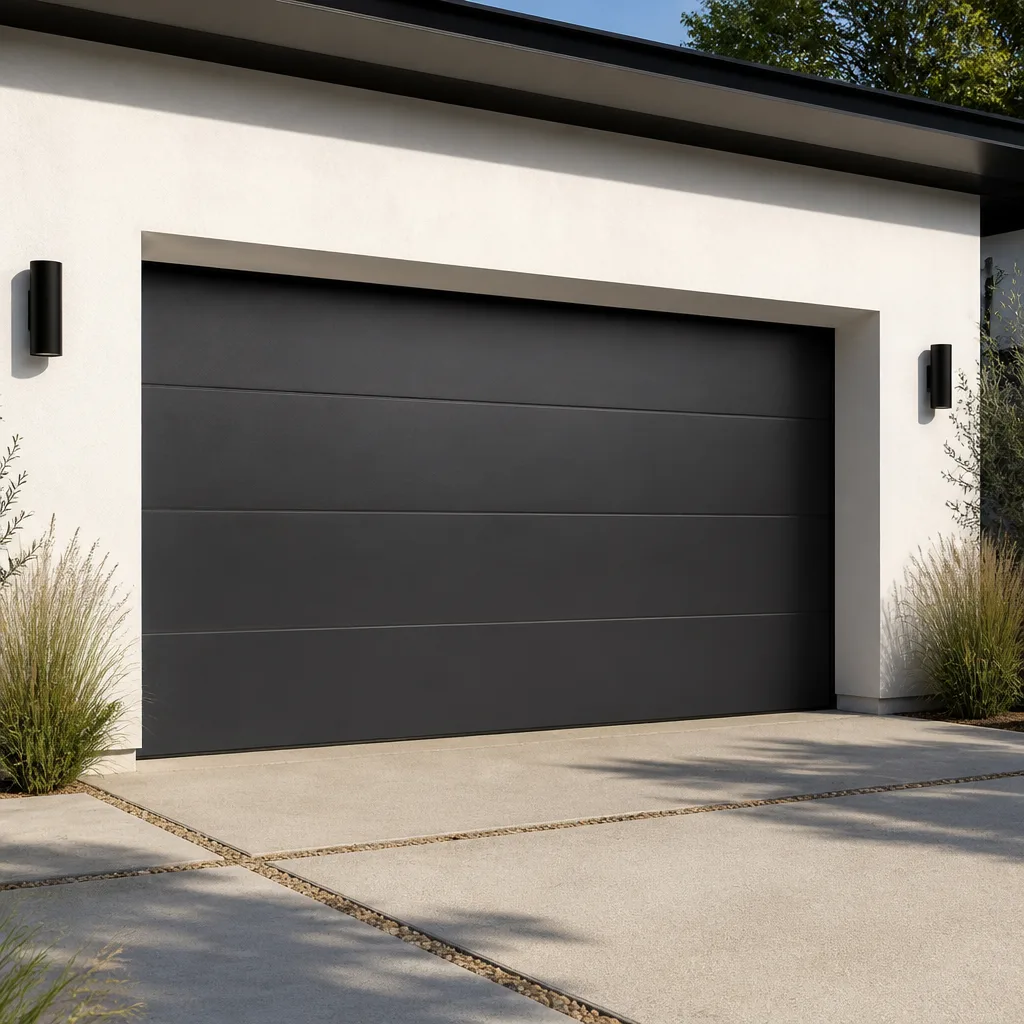 Modern flush
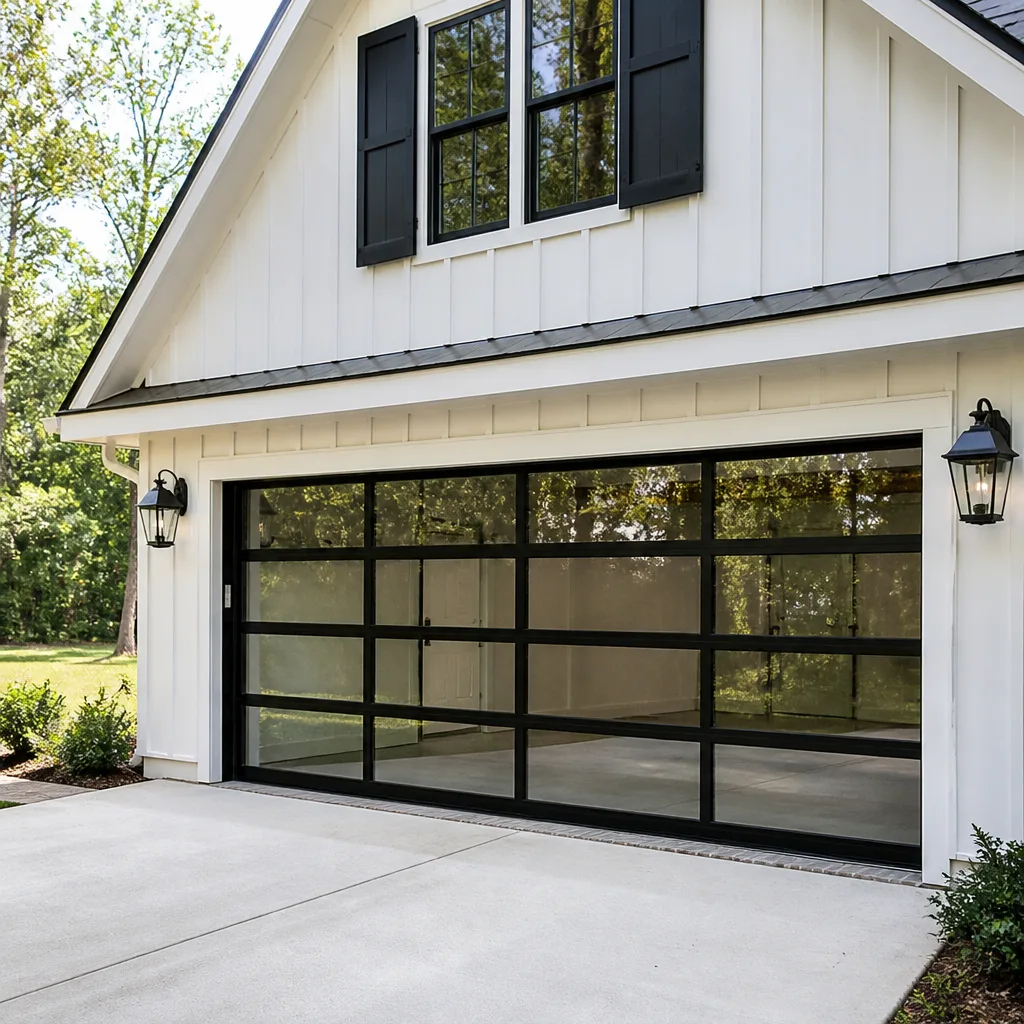 Full-view glass
 LiftMaster openers
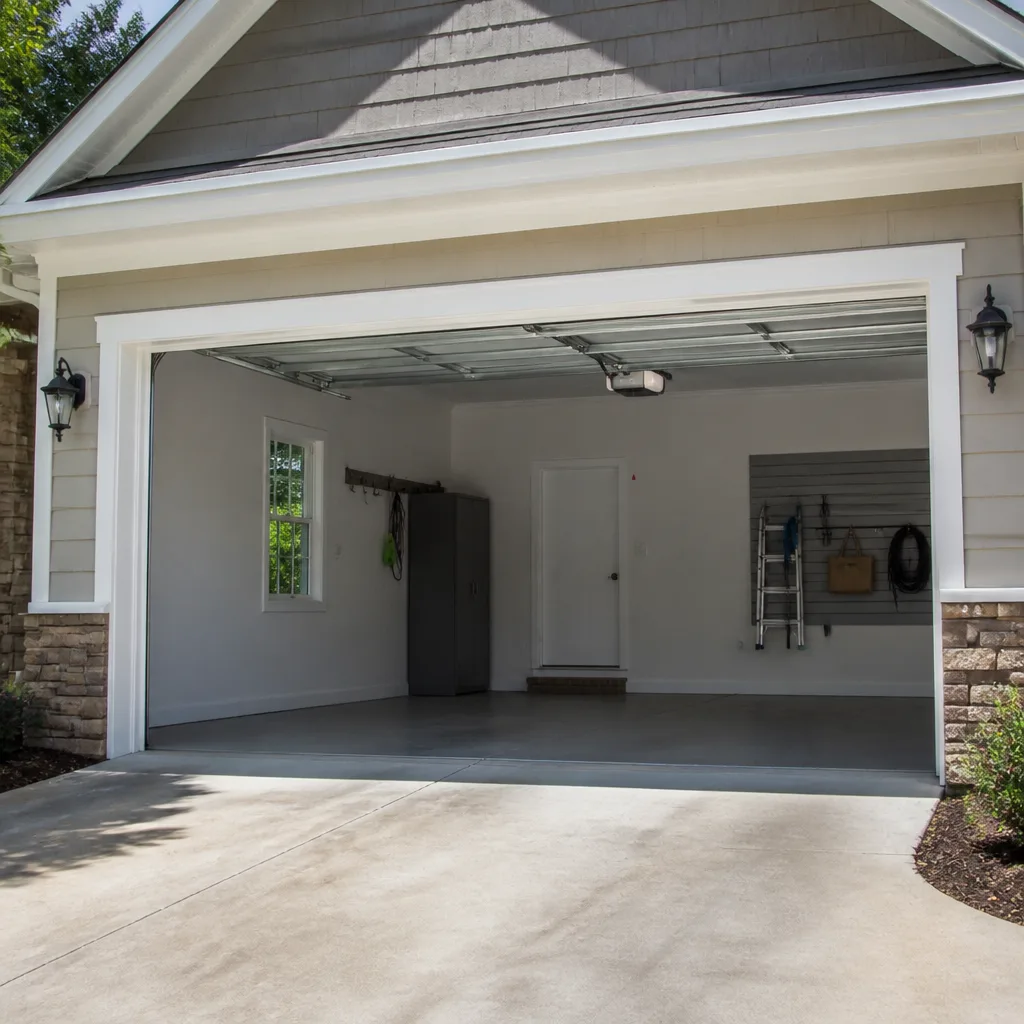 Chamberlain openers
Full 25-point door and opener safety check with every visit - springs, cables, rollers, tracks, and your LiftMaster or Chamberlain opener included
You get a price before we start. It does not change when the pro arrives.
Get your free estimateGarage Door Repair Troubleshooting in Edison: Common Problems and How to Fix Them
A door that reverses before it closes isn’t “broken.” It’s telling you exactly which sensor, spring tension setting, or track obstruction is the culprit. The trouble is that most of us listen to the symptom instead of the system behind it. The noise, the slowness, the gap at the bottom – each one points somewhere specific, and chasing the wrong part wastes a weekend or, worse, puts your hands near a spring that can hurt you. In this guide, we walk through the four-subsystem diagnostic framework our technicians use to read a failing door in Edison: springs, tracks and rollers, opener and motor, and safety sensors. You’ll learn how symptoms map to each, which fixes are safe to try, and which ones you should never touch.
Quick Answer
To troubleshoot a garage door in Edison, isolate which of the four subsystems is failing before you adjust anything. Run the manual release cord test first: if the door moves by hand easily, the problem is electrical (opener or sensors); if it’s heavy or binds, it’s mechanical (springs, tracks, or rollers). Safe fixes include lubrication, sensor alignment, and travel limit adjustment. Spring replacement and cable rewinding are never safe to do yourself and always require a trained technician.
Styles & brands we work with
- Raised-panel steel
- Carriage house
- Modern flush
- Full-view glass
- LiftMaster openers
- Chamberlain openers
Table of Contents
- The Four-Subsystem Diagnostic Framework
- Start Here: The Manual Release Cord Test
- Symptom-to-Subsystem Quick Reference
- Spring Problems: The Most Common and Most Dangerous
- Tracks and Rollers: Why Edison Humidity Matters
- Opener and Motor Failures
- Safety Sensors and Reversing Doors
- Safe DIY Fixes vs. Injuries Waiting to Happen
The Four-Subsystem Diagnostic Framework
Every garage door system – no matter the brand – is built from four subsystems that work together. When one fails, the whole door misbehaves, but the symptom almost always points to one culprit. Learning to think in these four categories is the single biggest difference between a homeowner who diagnoses the problem and one who guesses.
The four subsystems are:
- Springs – the counterbalance system that holds the door’s weight. When a spring fails, the door becomes dangerously heavy.
- Tracks and rollers – the guidance system that keeps the door moving in a straight path. When these wear or bind, the door drags or jumps.
- Opener and motor – the electrical drive system. When this fails, the door won’t move at all, or moves with strange limits.
- Safety sensors – the photo-eye system that reverses the door if something is in the way. When these are misaligned, the door reverses before closing.
Here’s why this matters: most people call us describing a single symptom – “it’s noisy” or “it reverses halfway.” A technician walks up, listens, and immediately knows which subsystem to inspect first. Noise usually means rollers or a dry spring. A reversing door nearly always means sensors. A door that’s heavy and won’t stay up means springs. A door that won’t move at all could be any of the electrical subsystems. When we work on a door in Edison, we run through the four in order – not because it’s complicated, but because it’s fast and it’s accurate.
Once you understand the framework, you can do the first pass yourself. That alone saves you time and often saves you a service call.
Start Here: The Manual Release Cord Test
Before you touch anything else, run the manual release cord test. This is the single most useful diagnostic step a homeowner can perform, and it takes about thirty seconds. It isolates whether the problem is mechanical (the door itself) or electrical (the opener or sensors).
The manual release cord is the rope hanging from the opener rail, usually with a red handle. Here’s how the test works:
- Stand clear of the door path and pull the release cord down so the door disconnects from the opener.
- With the opener disconnected, lift the door by hand slowly to about waist height.
- Let go. A properly balanced door should stay roughly where you left it, or drift down slowly.
- Lower it by hand and note whether it moves smoothly or binds.
If the door lifts easily and stays up, the springs are doing their job and the problem lives in the opener or sensors. If the door feels heavy, jerky, or won’t stay up, you’ve found a mechanical failure – usually springs or tracks. Either way, you’ve narrowed the diagnosis without tools.
One note: don’t force the door if it’s heavy. A door with a broken spring can weigh several hundred pounds, and trying to lift it yourself is how people get hurt. Re-engage the release afterward by pulling the cord back until it clicks; the opener can then reconnect on its next cycle.
Symptom-to-Subsystem Quick Reference
This table maps the most common garage door symptoms to the subsystem most likely responsible. Use it as a starting point, not a diagnosis – a real inspection confirms what’s actually failing. Our technicians use this same logic when a customer walks them through a problem on the phone before we ever arrive.
| Symptom | Likely Subsystem | What It Usually Means |
|---|---|---|
| Door reverses before closing | Safety sensors | Photo-eye misalignment, dirt on lens, or a sensor knocked out of bracket |
| Door is very heavy to lift | Springs | Broken or fatigued torsion or extension spring |
| Loud bang from the garage | Springs | Spring has broken (the bang is the tension releasing) |
| Door won’t move at all | Opener / motor | Dead motor, tripped breaker, or manual release still engaged |
| Door moves a few inches and stops | Opener / travel limits | Travel limit or force setting out of adjustment |
| Door is loud, squeaky, grinding | Tracks / rollers | Dry or worn rollers, dirt in track, loose brackets |
| Door jumps or shudders while moving | Tracks / rollers | Bent track, worn rollers, or debris in the track channel |
| Door pulls away from the wall | Tracks / brackets | Loose or pulled track bracket or hinge |
| Door opens a few inches then stops | Safety sensors (rare) | Blocked sensor or wiring fault |
| Opener runs but door doesn’t move | Opener / drive | Broken drive gear, worn belt or chain, or manual release engaged |
If you look at the right column, you’ll notice that “sounds awful” is never a diagnosis by itself. Sound is a signal the door is telling you to inspect. The subsystem tells you what to inspect.
Spring Problems: The Most Common and Most Dangerous
Spring failure is the most common garage door repair we handle in Edison, and it’s also the single most misunderstood. There are two kinds of springs on a residential door – torsion (mounted on a shaft above the door) and extension (mounted on the sides, running parallel to the tracks). Both do the same job: counterbalance the door’s weight so a person can lift it and the opener can do the rest.
When a spring fails, you’ll typically hear it. A loud bang, followed by a door that suddenly won’t lift. The opener will strain and reverse. Some people describe it as sounding like a gunshot from the garage – that’s the sound of steel releasing stored tension. If you hear that bang, don’t try to open the door. Don’t try to close it either. Get a trained technician out before anything moves.
Springs fail for a few reasons:
- Cycle count – springs are rated for a certain number of open-close cycles. Most residential springs land somewhere between 10,000 and 20,000 cycles, and daily use wears through that in a handful of years.
- Age – even springs that sit untouched weaken with time.
- Corrosion – humidity accelerates rust at the coils, and Edison’s climate – with the Raritan River nearby and typically humid summers – puts springs through more than a dry-climate door does.
- Improper installation – a spring set to the wrong tension wears out faster and puts strain on the opener.
Here’s the part that matters most: spring replacement is not a DIY job, ever. The energy stored in a wound torsion spring can kill. We say this plainly because it’s true, and because the home improvement videos make it look easier than it is. Cables under tension snap with the same force. Our technicians train specifically on spring repair because the margin for error is zero.
If you’re wondering whether a spring problem is behind your door’s behavior, our garage door spring repair service starts with a full inspection so you know exactly what’s wrong before anything is touched.
Tracks and Rollers: Why Edison Humidity Matters
Tracks and rollers are the second subsystem, and they’re the most affected by local climate. Edison’s humidity – especially the summer stretch – works on metal rollers and the steel tracks they ride in. Rollers are usually steel with a bearing in the middle, and that bearing is what fails first. Once a bearing dries out or rusts, the roller drags instead of rolling, and the door starts to sound like it’s grinding.
What to look for on tracks and rollers:
- Visible rust or pitting on rollers – a sign the rollers need replacing, not just lubricating.
- Debris in the track channel – leaves, small stones, even the occasional toy that got swept in. Clear it with a dry rag.
- Bends in the track – tracks are soft by design; a bumped track (often from a lawn tool, bike, or ladder) can derail rollers.
- Loose brackets – the metal brackets that hold the track to the wall can loosen with vibration.
- Warped wood panels – older wood doors absorb moisture and can bow, which puts uneven pressure on the rollers and track.
Wood panel doors show this hard in our climate. The panels closest to the opening – the bottom section especially – take on moisture in humid stretches, then dry and shrink in cooler weather. That cycle warps the panels just enough that the door no longer runs flat through the track. If you’ve noticed that a wood door in Edison gets harder to move in July and feels fine by October, that’s not your imagination.
Lubrication helps, and it’s one of the safest fixes you can do. A garage door lubricant – not WD-40, which is a solvent, but a proper garage door lube – applied to the rollers, hinges, and spring coils once or twice a year can add years to the system. If rollers feel rough or the door still drags after lubing, that’s a sign the rollers themselves are worn and should be replaced. That’s a straightforward service call, and our garage door repair team handles it as a single-visit fix.
Opener and Motor Failures
The opener is the third subsystem, and it gets blamed for more than its share of problems. Here’s the reality: if the manual release test showed the door lifts easily by hand, whatever’s failing is in the opener or sensors. If the door is heavy or binds, the opener was never the problem – it was just the messenger.
Common opener failures we diagnose:
- Dead motor – the unit gets power (you can hear a click when the wall button is pressed) but the motor doesn’t move. Sometimes it’s a control board or capacitor, sometimes the motor itself is done.
- Drive gear failure – a common failure on older units. The opener runs but the door doesn’t move, because the gear the motor drives has stripped.
- Belt or chain issue – sagging chain or worn belt leads to a door that stutters.
- Travel limit drift – the opener no longer knows where “fully open” or “fully closed” is. The door stops short or reverses at the limit. This is a setting, not a broken part.
- Force setting too low – the door reverses when it hits normal resistance. The opener thinks it’s blocked.
- Remote or wall button issues – sometimes it’s not the motor at all; a remote that quits working is often a battery, a programming loss, or a wiring issue at the wall button.
Edison has a lot of homes with LiftMaster and Chamberlain openers, and both are common in our service work. If your opener is older and the repair quote starts to approach the cost of a new unit, that’s a conversation worth having honestly. Sometimes fixing the existing opener is the right call – the parts are available and the unit still has years left. Sometimes replacement is the better money. We’ll tell you which, and why. Our garage door opener repair page covers what’s typically involved.
One safety note on openers: the two safety systems built into every modern opener (the photo-eye sensors and the pressure-reversal system) are not optional. If someone has disabled them or wired them out of the circuit, put them back. That’s not a troubleshooting preference, it’s the only thing that stops a closing door from crushing something or someone in its path.
Safety Sensors and Reversing Doors
A door that reverses before closing is the most common garage door complaint we get, and it’s almost always the sensors. Two small photo-eye sensors sit at the bottom corners of the door opening, one on each side, facing each other. When anything interrupts the infrared beam between them – a misalignment, dirt, a spider web, a piece of debris – the opener reads this as an obstruction and reverses the door.
Sensor troubleshooting you can safely do yourself:
- Look at each sensor. Most have a small LED indicator that should be solid when the sensors are aligned and receiving. A blinking or off LED signals a problem.
- Wipe both lenses with a dry, soft cloth. Dust and cobwebs are common in garages.
- Check that both sensors are facing each other squarely. A bumped sensor (from a recycling bin, a bike, a car bumper) rolls off alignment easily.
- Loosen the mounting screw and nudge the sensor back into line, then tighten. Look for the LED to go solid.
- Check that no object is sitting in the door’s path – a hanging bike, a bag of sports equipment, a shop vac pushed too far forward.
If the LEDs are solid but the door still reverses, the problem moves upstream. It could be a wiring fault in the sensor circuit, a bad sensor unit, or a pressure-reversal setting that needs adjusting. That’s the point where a technician should look at it. Sensor issues are the one subsystem where the homeowner might genuinely solve it in five minutes. The rest of the time, it’s a service call.
One more thing on reversing doors: don’t assume the door is “safe” because it reverses. If your door reverses, the sensors are doing their job. That’s good. What you want to check is whether the door reverses for the right reason. A door that reverses on a clear, unobstructed path with clean, aligned sensors is telling you something is failing. Get it looked at.
Safe DIY Fixes vs. Injuries Waiting to Happen
Not every garage door problem needs a technician, but a few simply should never be touched by a homeowner. Here’s the honest breakdown of what we tell people who call asking whether they should try a repair themselves.
Safe to try yourself:
- Lubrication – rollers, hinges, spring coils, and the opener rail. Once or twice a year. A $10 can of garage door lube prevents a lot of the squealing we hear about.
- Sensor cleaning and alignment – wipe the lenses, nudge the sensors back into line. If the LED goes solid and the door behaves, done.
- Travel limit adjustment – if the door is stopping short or going too far, the opener’s travel limits can usually be adjusted from the opener panel or the wall control. The manual that came with your opener (or the manufacturer’s online manual) walks you through it.
- Clearing the track – debris, leaves, and small objects in the track channel can be cleared by hand.
- Replacing batteries in remotes – first thing to try when a remote quits working.
Never safe to try yourself:
- Spring replacement – torsion or extension, both. The stored energy in a wound spring is enough to cause serious injury or worse, and there is no “safe” way to release that energy without the right tools and the training to use them. Our technicians train specifically on spring work for this reason.
- Cable rewinding – the cables under a torsion system are under the same tension as the spring. A snap releases that energy instantly. Never touch them.
- Removing the bottom bracket – the metal bracket at the bottom of the door holds a cable under tension. Loosening those bolts is one of the most dangerous things a person can do on a garage door.
- Adjusting the torsion spring tension by hand – winding bars and correct procedure are needed. The wrong sequence is an injury waiting to happen.
- Working on the opener’s electrical wiring at the panel – if the opener is hardwired, the wiring should be done by someone trained to do it.
Here’s how we frame it: if the repair involves a spring, a cable, or the bottom bracket, stop. If it involves lubrication, cleaning, sensor alignment, or settings on the opener, you’re probably fine to try it. The line between safe and not-safe is that clear.
Common Mistakes to Avoid
- Forcing a heavy door. A door with a broken spring weighs several hundred pounds and forcing it can bend the track or snap a cable. If your door suddenly won’t lift, leave it down and call. We handle a lot of Edison doors this way – waiting is cheaper than a damaged door.
- Using WD-40 as garage door lubricant. WD-40 is a solvent, not a lubricant. It cleans, but it doesn’t stay on the metal. Use a garage door-specific lubricant on rollers and hinges, and it’ll last far longer.
- Trying spring replacement as a “one-weekend” project. This is the most dangerous DIY repair on a residential property. The videos make it look possible; they leave out the part where people get seriously hurt.
- Ignoring the sensor LED. A door that reverses intermittently is often a sensor losing alignment. Check the LED before assuming the opener is going bad.
- Assuming a bent track is “fine.” A bent track forces rollers off-line and wears the whole system faster. Small bends get fixed cheap; ignored bends turn into panel damage.
- Skipping lubrication through the humid season. Edison’s summers are hard on roller bearings. A light lube in late spring pays for itself before the fall.
- Wiring out the safety sensors. If someone has bypassed the photo-eyes to “make it work,” put them back. Those sensors are the only thing stopping a closing door from crushing something in its path.
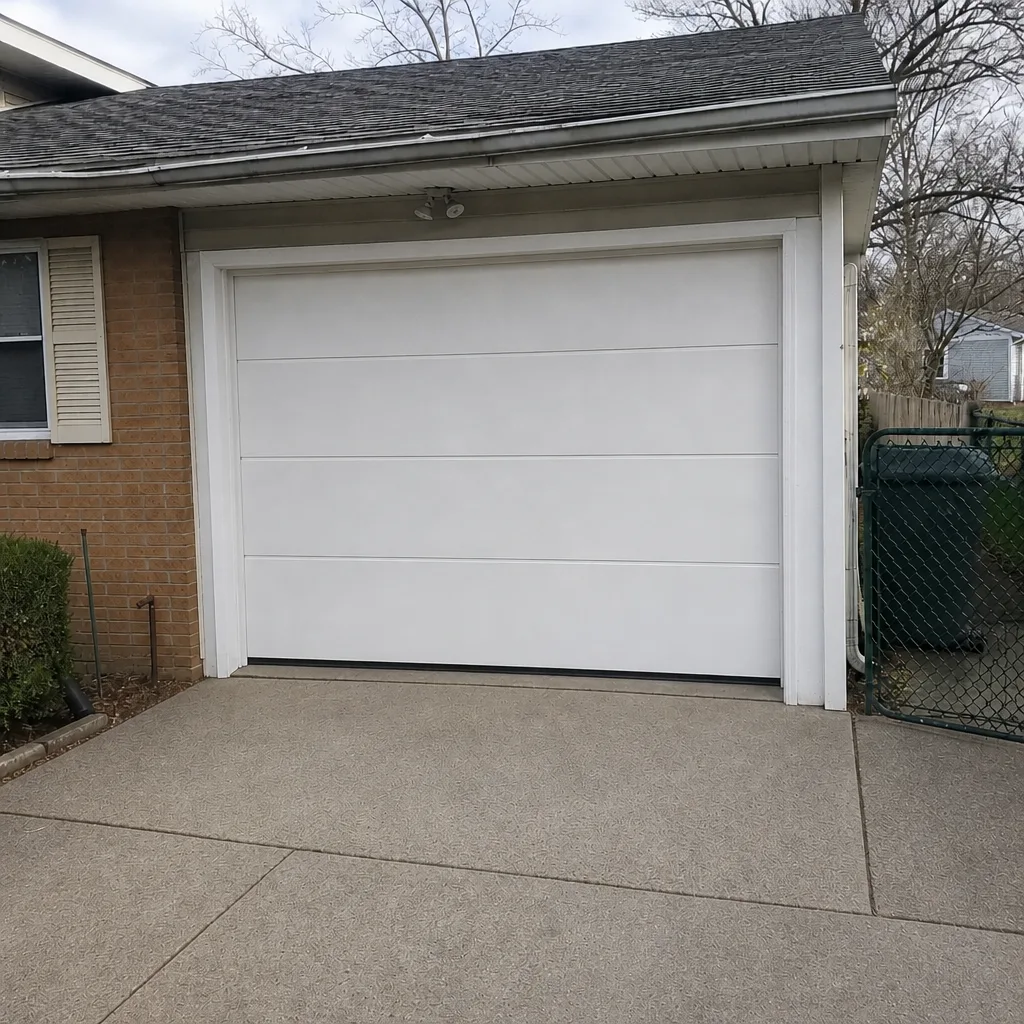
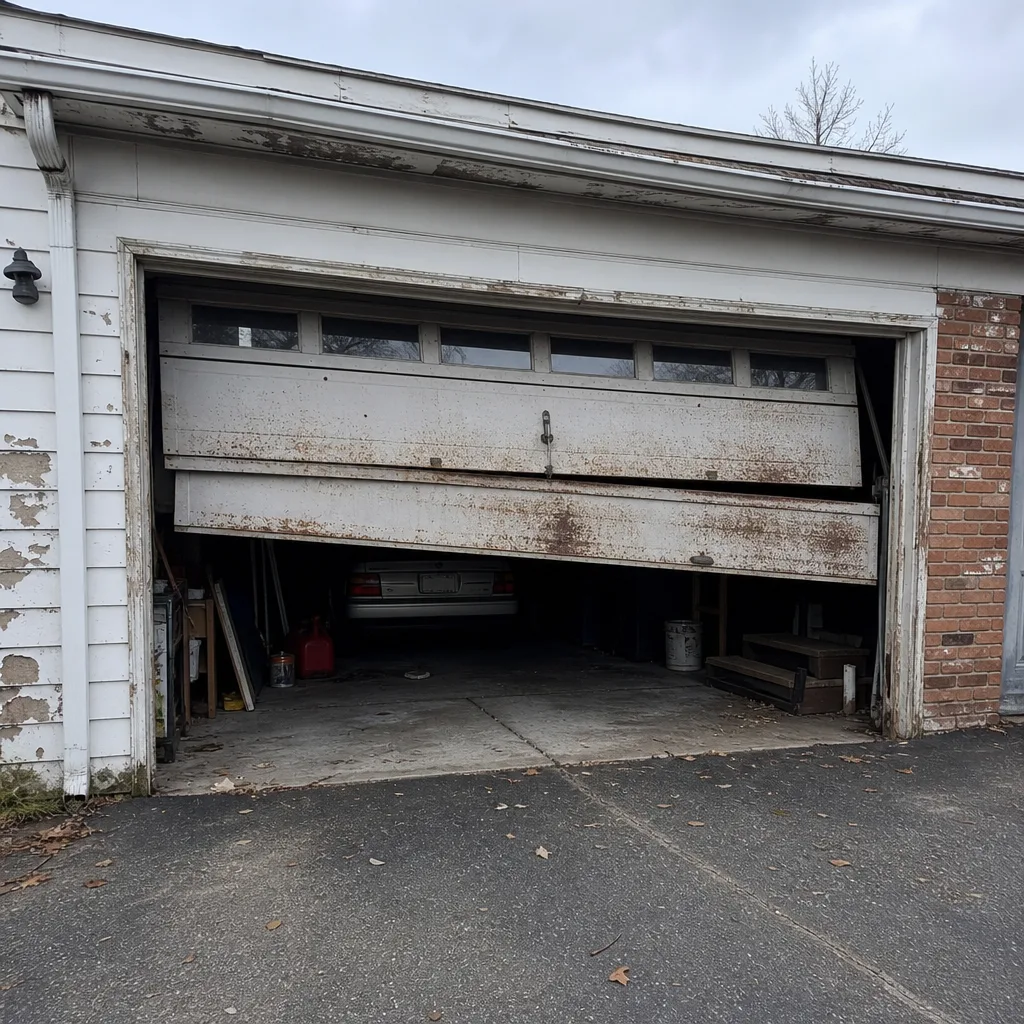
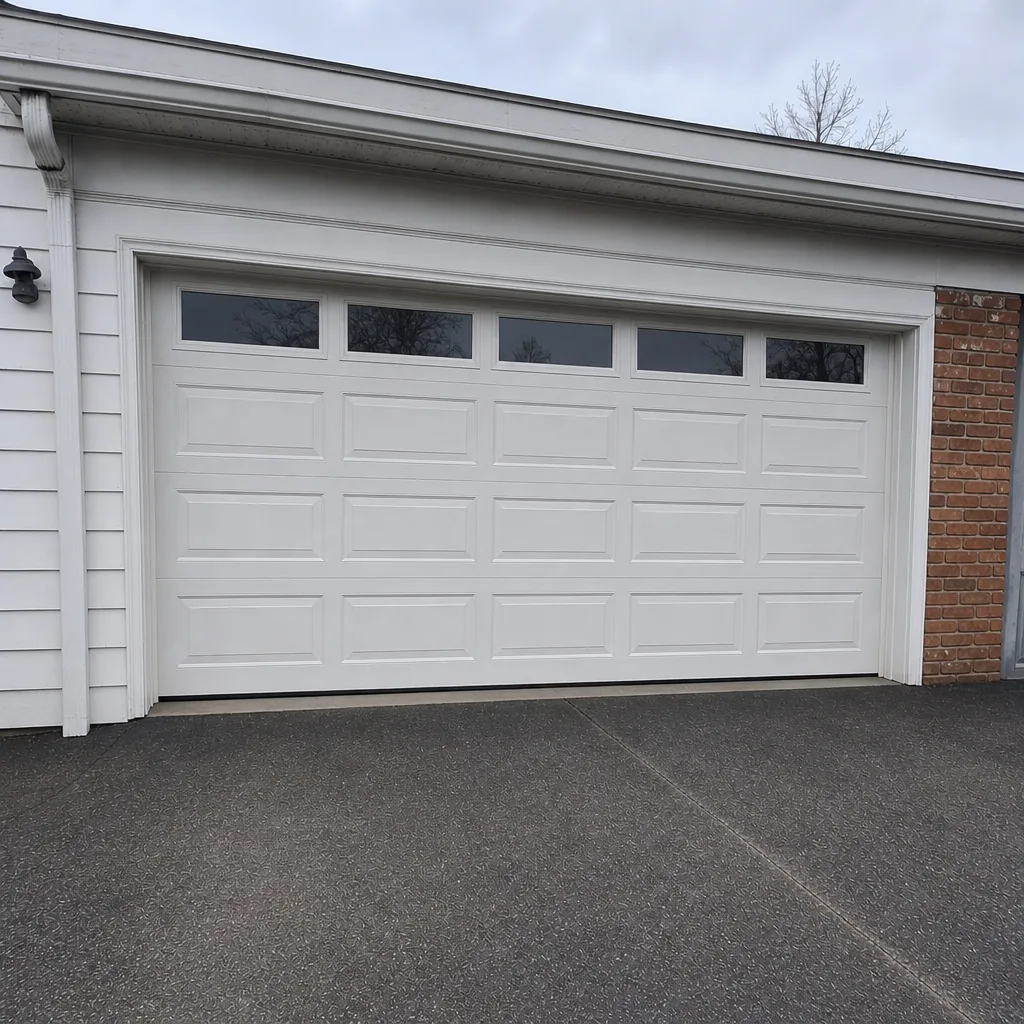
See the difference
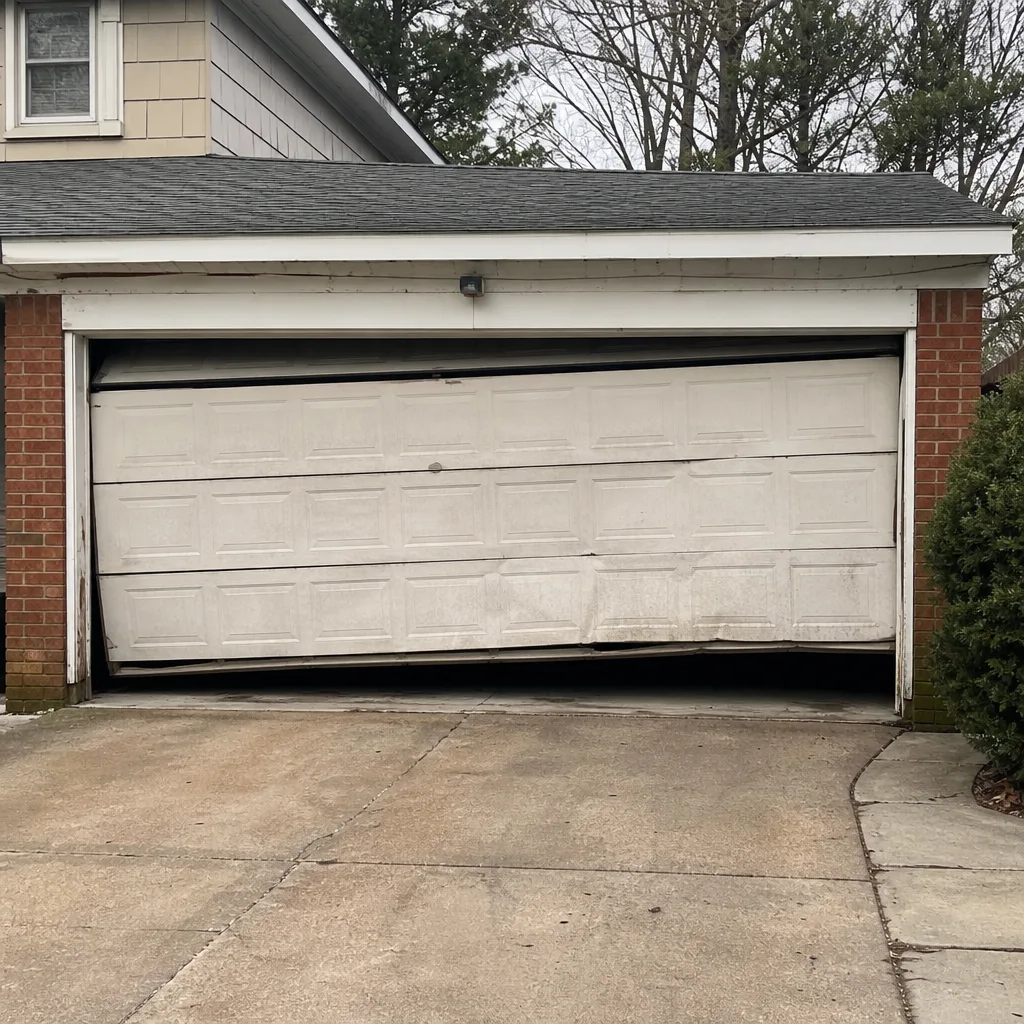 Before
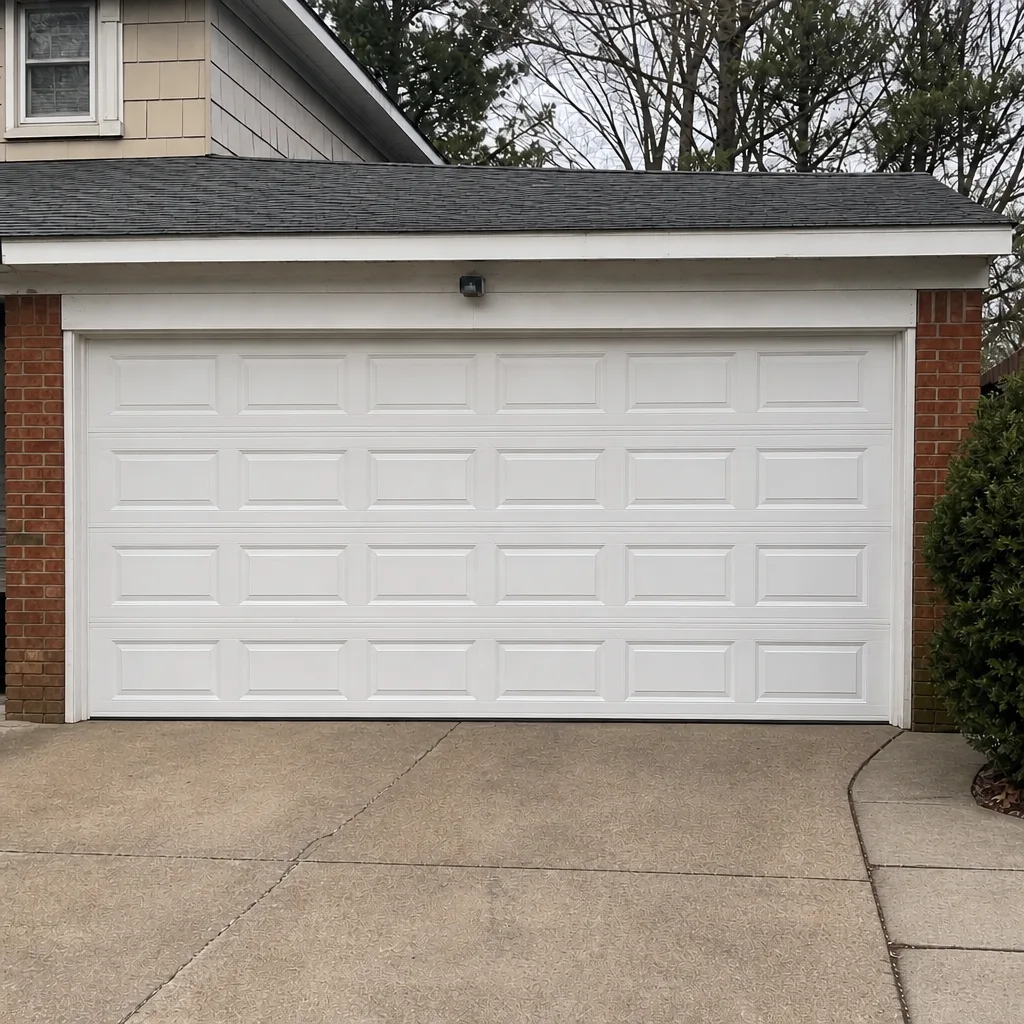 After
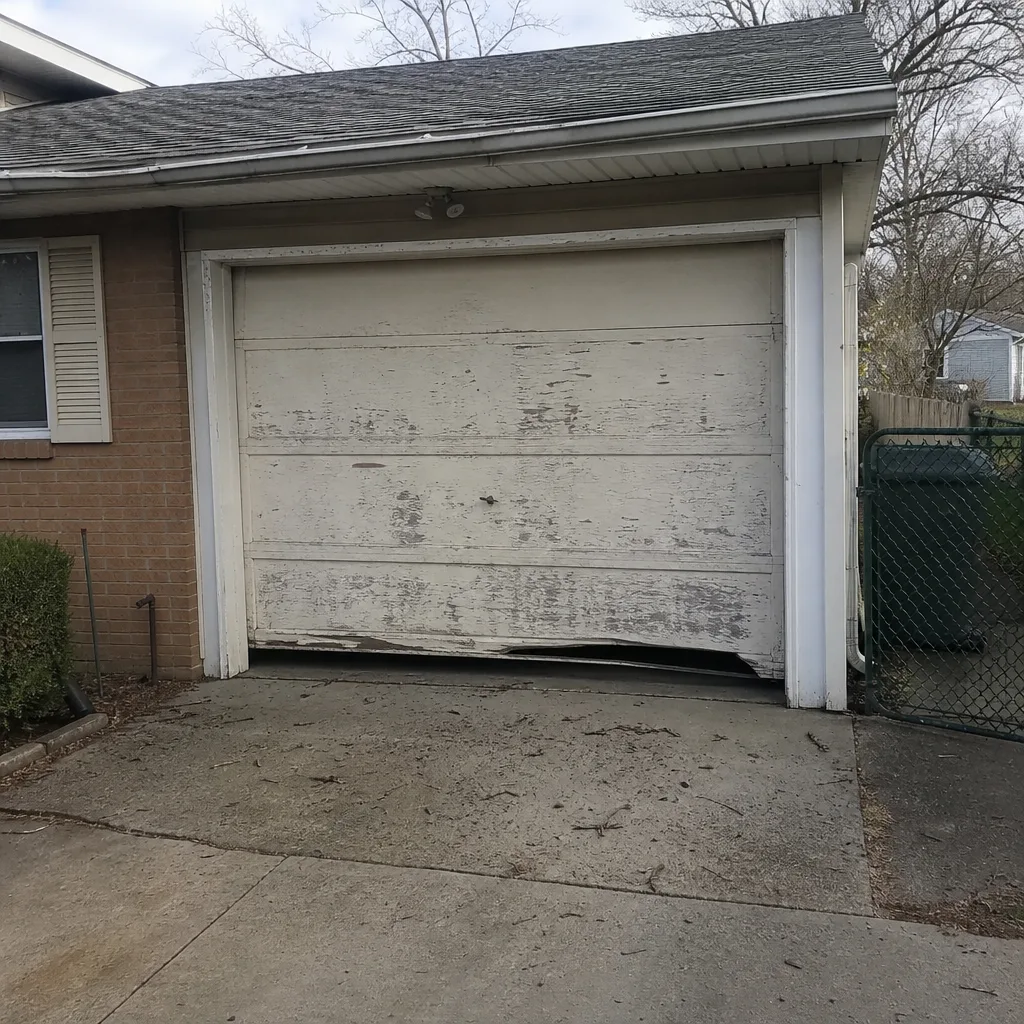 Before
 After
 Before
 After
When to Call a Professional
Call a professional if any of these apply: the door won’t lift, a spring has broken (you heard the bang), the door has pulled away from the wall, the cables look slack or frayed, the track is visibly bent, or the door reverses on a clear path after you’ve cleaned and aligned the sensors. Call if the opener is more than ten years old and has stopped working reliably – it’s often a sign the unit is at the end of its life. And call if you’ve tried the safe fixes and the problem persists.
If you’re unsure whether a problem is safe to troubleshoot, call before you touch it. A description over the phone is often enough for a technician to tell you whether it’s a homeowner-fixable issue or a same-day repair.
Edison Garage Door Repair Co offers free estimates in Edison – call (855) 658-5248. We answer 24/7. Fast dispatch from 7am to 7pm, Sunday through Friday.
Frequently Asked Questions
Run the manual release cord test: pull the release cord, then try to lift the door by hand. If the door feels very heavy or won’t stay up, the problem is the springs. If it lifts easily by hand but won’t move when you re-engage the opener, the problem is opener or sensors. This one test isolates the mechanical side from the electrical side, and it’s the first thing we’d do on a service call in Edison. If you’re unsure after the test, call (855) 658-5248 for a free estimate – we’d rather talk you through it than have you force a heavy door.
Your garage door reverses before closing because the safety sensors are either misaligned or blocked. Check that both photo-eyes at the bottom of the door opening are clean, facing each other squarely, and have a solid LED indicator. Wipe the lenses with a dry cloth and nudge any misaligned sensor back into line. If the LEDs are solid and the door still reverses, the sensor wiring or the opener’s force setting needs a technician’s look. Call (855) 658-5248 for a free estimate on a professional diagnostic.
No. Garage door spring replacement is not a safe DIY repair, and no amount of online video changes that. The stored energy in a wound torsion spring is enough to cause serious injury, and the margin for error is zero. Extension springs carry the same risk. This is the one repair we never recommend homeowners attempt, no matter how mechanically inclined they are. Our technicians train specifically on spring work because it’s the most dangerous repair on a garage door. Call (855) 658-5248 and we’ll get a trained technician out for a free estimate.
Summer humidity – Edison’s proximity to the Raritan River and the typical dampness of July and August – affects rollers, track, and especially wood door panels. Roller bearings rust, wood panels absorb moisture and warp, and the door drags more than it does in cool weather. If your door gets noticeably harder in the humid stretch, lubricate the rollers, hinges, and spring coils with a garage door lubricant, and check for panel warping on wood doors. If the door still binds after that, the rollers likely need replacing. Call (855) 658-5248 for a free estimate.
Yes, lubrication is one of the safest maintenance tasks you can do on a garage door. Use a garage door-specific lubricant on the rollers, hinges, and spring coils once or twice a year. Don’t use WD-40 – it’s a solvent, not a lubricant, and it strips away the grease the bearings need. Lubrication prevents most of the squealing and grinding we hear about. It’s a $10 fix that adds years to the system. Call (855) 658-5248 if the door still makes noise after lubing – that usually means worn rollers or a dry spring bearing, which is a quick service visit.
Yes. Same-day service is available for most repair calls in Edison, including spring failures, opener failures, and doors that won’t close. We work on the most common brands already in Edison garages – LiftMaster, Chamberlain, Genie, Raynor, Clopay, Amarr, Wayne Dalton, and Craftsman – so we arrive with the right parts for the first visit. Call (855) 658-5248. We answer 24/7. Fast dispatch from 7am to 7pm, Sunday through Friday. Our technicians have up to 9 years of experience and repair work quoted before the job starts stays at the quoted price.
The Bottom Line
Troubleshooting a garage door is really about reading the system, not the symptom. Four subsystems – springs, tracks and rollers, opener, and sensors – account for nearly every failure, and each one has a symptom signature that points to the culprit. Run the manual release cord test first. If the door lifts easily, look at the electrical side; if it’s heavy or binds, look at the mechanical side. Sensor alignment and lubrication are safe to try yourself. Springs, cables, and the bottom bracket are not. When in doubt, call a technician – the diagnosis is faster and the repair is safer. In Edison, that’s what we do every day. From a broken spring to a brand-new door, we handle the full range of garage door service through Edison Garage Door Repair Co. The right part, the right fix, the first visit – that’s the standard.
Call (855) 658-5248 for a free estimate. We answer 24/7. Fast dispatch from 7am to 7pm, Sunday through Friday.
Written by the team at Edison Garage Door Repair Co.