
Last updated November 22, 2026
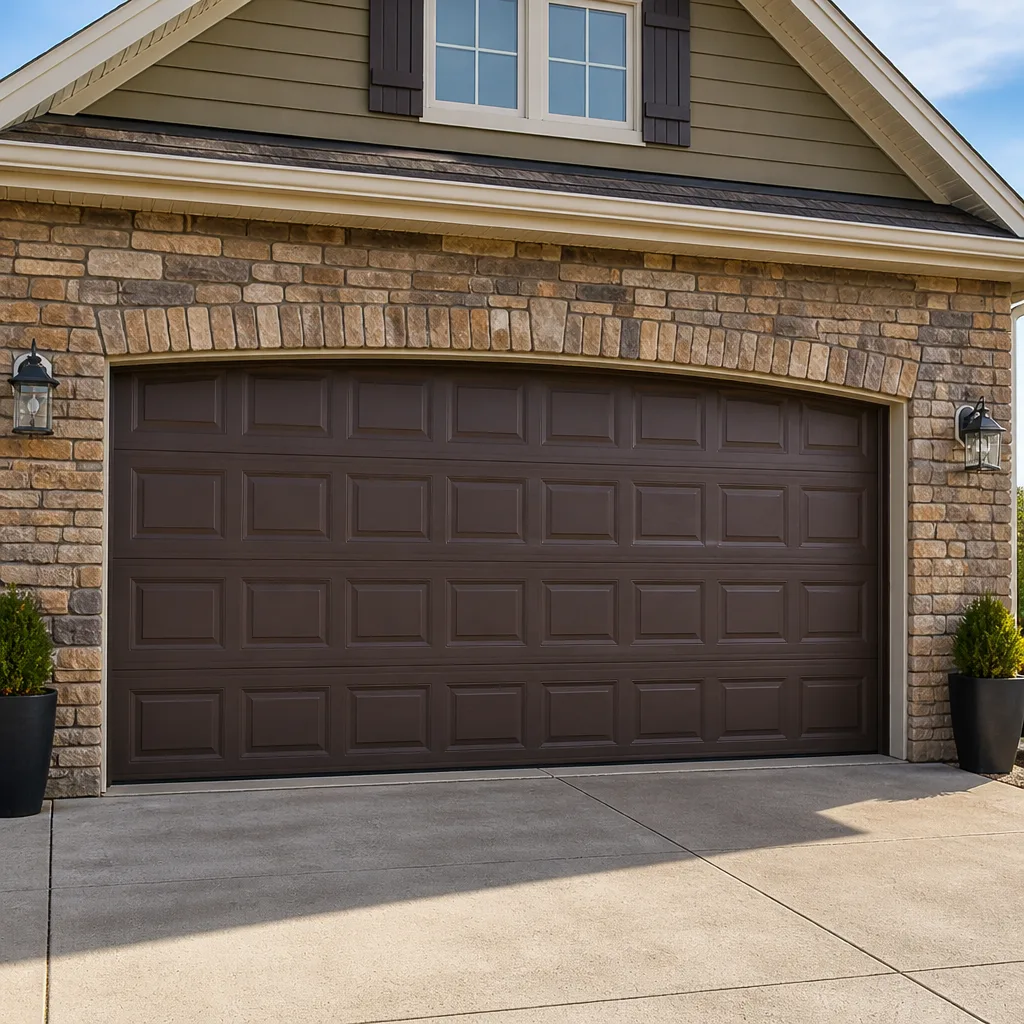 Raised-panel steel
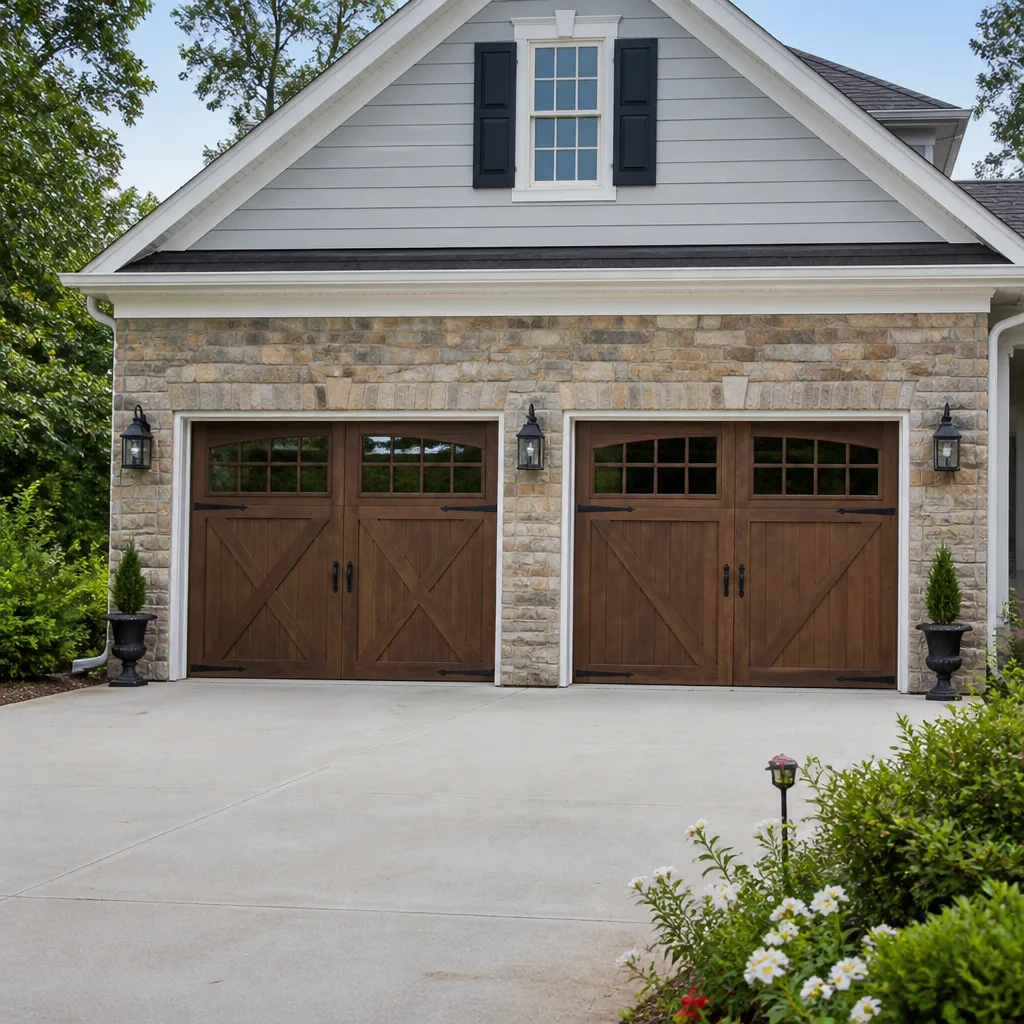 Carriage house
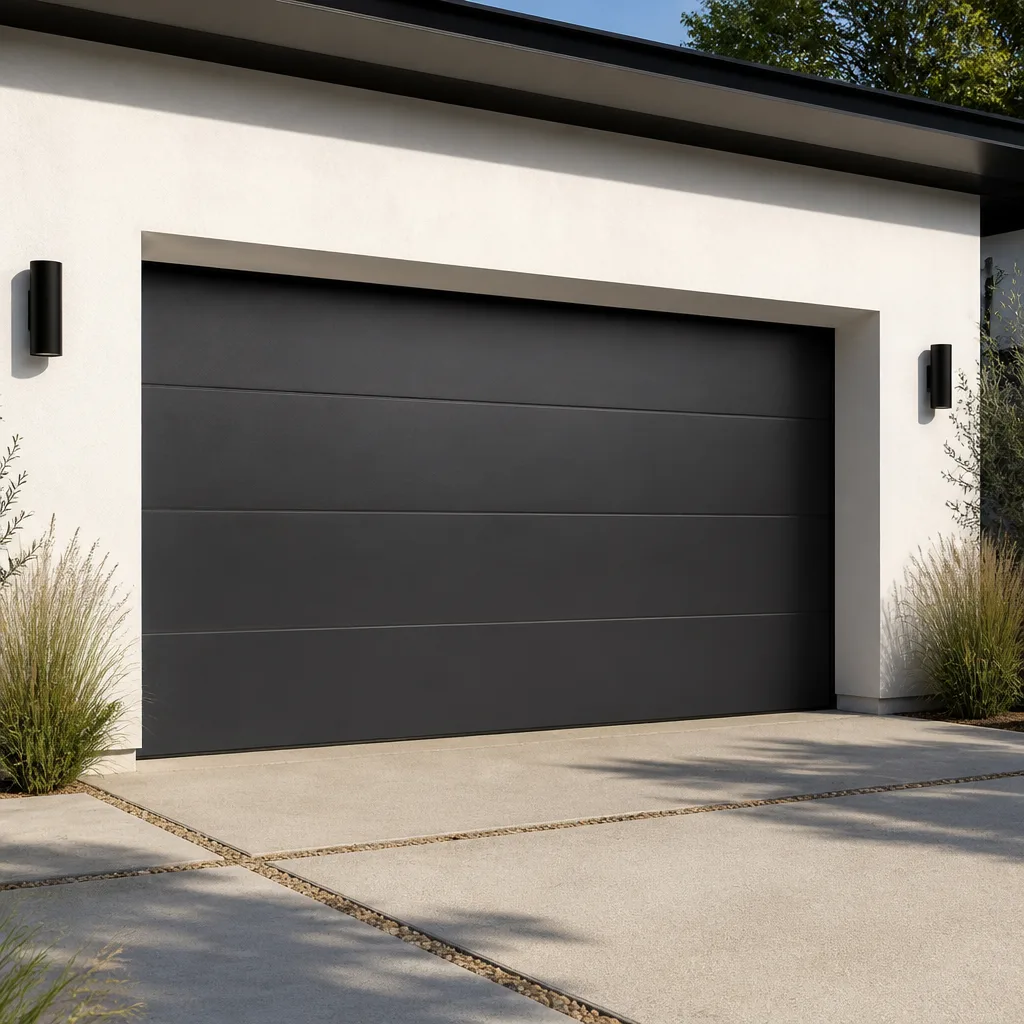 Modern flush
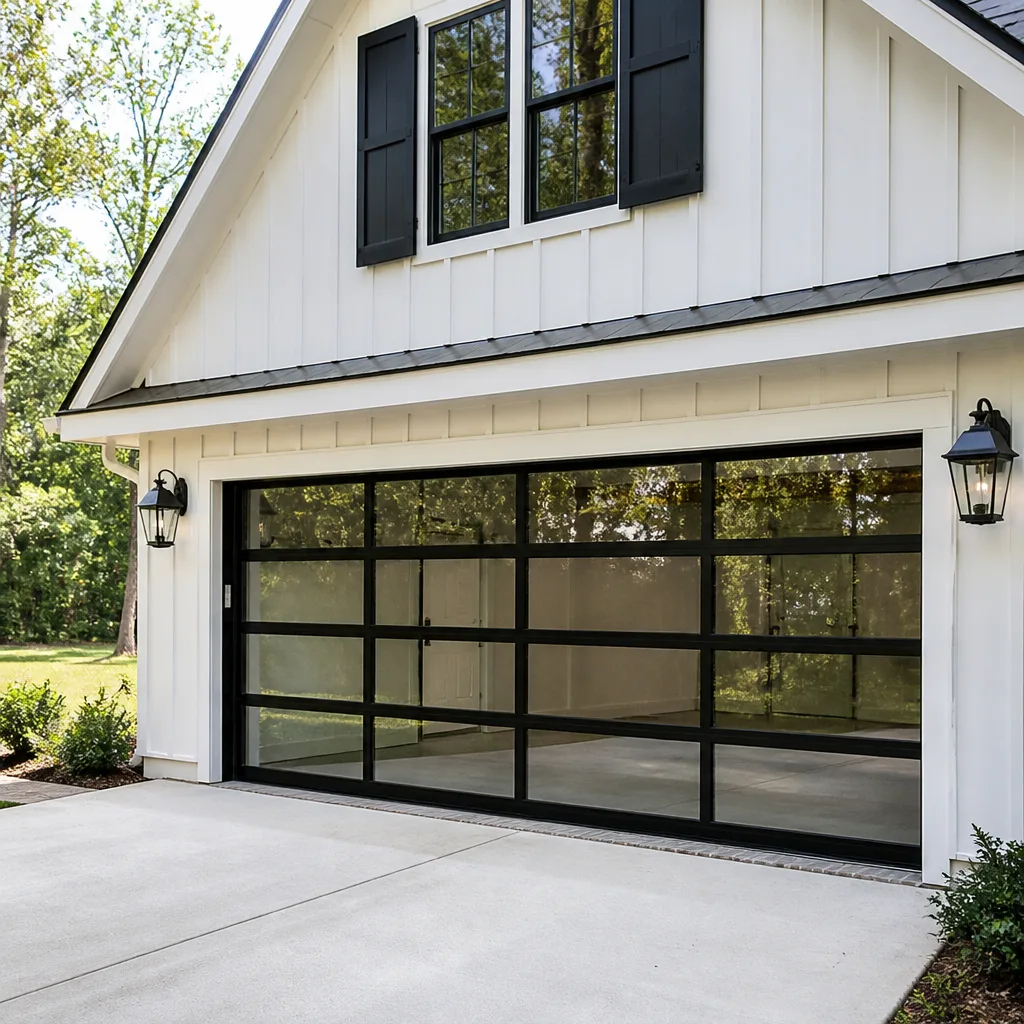 Full-view glass
 LiftMaster openers
 Chamberlain openers
Full 25-point door and opener safety check with every visit - springs, cables, rollers, tracks, and your LiftMaster or Chamberlain opener included
You get a price before we start. It does not change when the pro arrives.
Get your free estimateGarage Door Emergency Preparedness Guide for Edison Homes
Most Edison homeowners assume the garage door will keep working until the day it doesn’t, and that the fix will be a phone call away. The part nobody plans for is the hour before the technician arrives: a car trapped inside, a door stuck open to the street, or a spring that let go while the family was already running late. This guide covers what to do in that gap. We’ll walk through the manual release, battery backup openers and what their cycle ratings actually mean, wind load ratings for New Jersey doors, storm track damage, and how to secure a disabled door so it stays safe and locked until we can get there.
Quick Answer
To prepare an Edison home for a garage door emergency, learn where the manual release cord hangs and practice pulling it with the door fully closed, install an opener with battery backup if your current unit has none, know your door’s wind rating before storm season, and keep the door’s bottom seal and track clear so a small failure doesn’t become a big one. If the door is already stuck, don’t force it. Pull the release only with the door down, then call a trained technician for anything involving springs or cables.
Styles & brands we work with
- Raised-panel steel
- Carriage house
- Modern flush
- Full-view glass
- LiftMaster openers
- Chamberlain openers
Table of Contents
- How the Emergency Manual Release Works (and the Mistake That Damages Doors)
- Battery Backup Openers and Edison Power Outages
- Wind Load Ratings and Storm-Ready Hardware in Edison
- What to Do If Your Door Comes Off the Tracks
- How to Secure a Door That Won’t Close
- When a Spring or Cable Fails
- Seasonal Preparedness Checklist for Edison Homes
- When to Call a Professional
How the Emergency Manual Release Works (and the Mistake That Damages Doors)
Every automatic garage door has a manual release, usually a red cord with a handle hanging from the trolley that connects the opener arm to the door. Pulling it disengages the door from the opener so you can lift it by hand. The counterintuitive part: the cord is meant to be pulled with the door fully closed, in the down position. Pull it while the door is raised and gravity takes over. The door comes down hard, and the force can bend panels, snap the opener arm, or worse, land on whatever is underneath.
Here’s the sequence we walk homeowners through:
- Make sure the door is completely closed and nothing is standing in its path.
- Locate the release cord, typically near the center of the door’s top edge on the opener rail.
- Pull the handle straight down until you feel the trolley release with a click.
- Lift the door slowly by hand, using the bottom panel as a handle, and raise it to the open position.
- If the door feels unusually heavy or won’t stay up, stop. That’s a spring problem, and the door should not be forced.
Once the door is open, prop or secure it before you walk away. A door with a broken spring, or one released on a slope, can slide back down. The release is a tool for getting a car out or gaining access, not a permanent setting. When the power comes back, re-engage the trolley by pulling the cord once more and running the opener briefly.
One note for Edison homes with older openers and Wayne Dalton doors: the trolley design varies, and a few systems use a different release mechanism. Knowing which one you have before an outage saves time. When in doubt, our team can show you during a routine visit.
Battery Backup Openers and Edison Power Outages
Edison sits on a stretch of older infrastructure, and storms and summer outages can leave a garage locked for hours. Battery backup openers solve this by keeping the door operational when the grid drops. A battery backup unit runs the door from a rechargeable pack mounted inside the opener housing, so you can still open and close it with the remote.
The spec most homeowners miss is the cycle count. Manufacturers rate batteries by how many open-close cycles they’ll deliver on a full charge. A typical backup battery might be rated for 20 to 30 cycles, which sounds like plenty until you realize a family leaving for work, school, and errands can burn through that in a day. In practice, the battery is designed for a handful of uses during an outage, not to run the door indefinitely.
What to know when choosing or checking a backup system:
- Confirm your opener is battery-backup ready. LiftMaster and Chamberlain units often support a plug-in battery pack; older Genie models may not.
- Check the battery date. Backup packs degrade and need replacing every few years.
- Test it once a season by unplugging the opener and running the door from the backup.
- If you don’t have backup and the power fails, the manual release in the previous section is your fallback.
If you’re replacing an opener, this is the moment to add backup. Our garage door opener repair team can tell you whether your current unit supports a battery pack or whether a new opener makes more sense.
Wind Load Ratings and Storm-Ready Hardware in Edison
New Jersey doesn’t get hurricanes every year, but nor’easters, tropical remnants, and severe thunderstorms push real wind against a garage door. A garage door is the largest opening in the house, and when wind gets behind it, the door can buckle, twist, or blow inward. That’s why wind load ratings matter, and why the question matters more for Edison homes near the low-lying areas around the Raritan River corridor.
Wind load is measured by the door’s design pressure rating, which tells you how much wind force the door and its hardware are built to handle. Standard residential doors in most of Edison meet basic wind ratings. Homes in mapped flood zones or exposed lots may warrant upgraded struts, heavier hinges, and reinforced bottom brackets. Hurricane-rated doors and reinforcement kits exist for exactly this reason, and brands like Clopay and Amarr offer rated models.
To assess your door:
- Check the door’s label or paperwork for a wind rating.
- Look at the mounting hardware – extra steel struts across panels indicate a reinforced door.
- Check with the local building department on any wind-related requirements for your address, particularly if you’ve had flood damage or are replacing a door.
- Ask about rated hardware if your door faces an open field or sits on a corner lot.
The bottom line: don’t assume your existing door is rated unless you’ve checked. And if you’re replacing one, ask specifically. We can walk through ratings and reinforcement options for Clopay and Amarr doors if you want a straightforward comparison.
What to Do If Your Door Comes Off the Tracks
When a door jumps its track during high wind or after a hard hit, the temptation is to grab it and try to push it back. Don’t. A door that has partially left the track is under tension and weight, and forcing it back can bend panels, spring a cable loose, or send the whole assembly down on you. Here’s the sequence that prevents further damage.
- Keep everyone, including pets, out of the area directly below and in front of the door.
- Do not run the opener. It will keep trying to move a door that isn’t tracking, which can snap the arm or burn out the motor.
- Do not attempt to lift or straighten panels by hand. The weight and tension aren’t safe to handle without the right tools and knowledge.
- If you can, visually note how far out of the track the door sits and whether it’s leaning inward or outward. That helps a technician diagnose faster.
- Block access – a chair, tape, or a vehicle parked safely out of range – so nobody pushes the door.
- Call for service. Track repair by hand is a standard, quick fix for a trained technician and a serious risk for anyone else.
If the door is off the track but still holding, don’t try to close it. A door that’s off track and partially up is at the highest risk of falling. Our garage door repair team handles track alignment and panel repair regularly across Edison.
How to Secure a Door That Won’t Close
A garage door stuck open or released manually leaves the home exposed to weather and to anyone who wants in. During a multi-hour or multi-day outage, securing the door is part common sense and part mechanics.
- Never leave a manually released door up without bracing. A door with a weakened spring can drop without warning. Use a sturdy object to block the door’s travel if it’s staying open, or keep it closed and locked instead.
- Use the door’s lock or slide bolt. Most doors have a manual lock or a slide bar that engages the track. If yours does, use it – it holds the door in place regardless of the opener.
- Clear the bottom of the door. Nothing, including a child’s toy or a bike, should sit in the door’s path when it’s closed manually.
- For a door that won’t close at all, a temporary barrier across the opening – moving blankets or a sheet of plywood secured to the frame – reduces exposure until a technician arrives.
- Keep the door closed when possible. A closed door is sturdier than an open one, both for wind and for security.
One point we can’t stress enough: a door on a dead opener or weak spring should never be propped open with a stick and left for hours. If your home sits on a slope or the door is heavy, the risk of it dropping is real. Call a professional before you rig up a workaround.
When a Spring or Cable Fails
Springs and cables are the parts that actually lift a garage door, and they’re the parts that cause the most serious injuries. A torsion spring is under constant tension; when it breaks, it can release that tension suddenly. Cables, meanwhile, hold the door’s weight along its sides. If a cable snaps, the door can drop, twist, or come off the track entirely.
What to do if you hear a loud snap or the door suddenly won’t lift:
- Get away from the door. Do not stand directly underneath it.
- Don’t run the opener. It won’t lift a door with a broken spring, and forcing it can damage the opener and the door.
- Don’t touch the spring or the cable. The broken part may still be under tension, and handling it can cause serious injury.
- Close the door if you can do so safely and without standing under it. If you can’t, block the area.
- Call a trained technician. Spring repair is a job for garage door spring repair, not a weekend project.
Most spring failures announce themselves: the door bangs before it gives out, the opener sounds strained, or the door lifts unevenly. If you notice any of those warnings, get it looked at before the spring fails outright. Our technicians have up to 9 years of experience with torsion springs and the opener systems that rely on them.
Seasonal Preparedness Checklist for Edison Homes
A few minutes twice a year catches most problems before they become emergencies. Run this list in spring ahead of storm season and again in late fall before winter sets in.
- Test the manual release. With the door closed, pull the release, lift the door by hand, and re-engage. If it doesn’t move smoothly, that’s a symptom worth checking.
- Check the battery backup. Unplug the opener and run the door on the backup. Confirm the battery pack is within its service life.
- Look at the springs and cables. A visible gap in a torsion spring means it’s broken. Frayed cables or loose hardware need a technician.
- Inspect the tracks and the bottom seal. Bent tracks and worn seals let water and wind in during storms.
- Lubricate the moving parts. Rollers and hinges benefit from a proper lubricant, not a spray of whatever’s in the garage.
- Check the door’s balance. With the release pulled, a door should lift with modest effort and hold partway up. If it slams down, the springs need attention.
If any item on this list brings up a question, or the door feels off, our team can take a look and give you a clear answer on what needs attention before the next storm.
Common Mistakes to Avoid
- Pulling the release on a raised door. This is the single most common way a garage door gets damaged during an outage. The door needs to be fully closed before the release is pulled.
- Forcing a door that’s off the track. If the door jumps the track, don’t try to push it back. Let a technician handle it.
- Touching a broken spring or cable. Both stay under tension after they fail. Leave them alone.
- Assuming your door is wind-rated. Check the label or paperwork before storm season instead of after.
- Ignoring a strained opener. Grinding, uneven lifting, or a door that reverses partway through travel usually points to a mechanical issue that a service call catches before it becomes one.
- Leaving a manually released door open and unsupported. A door with a weak spring can drop without warning, and an open door is a security gap.
- Skipping the battery backup test. A backup battery that hasn’t been tested in a year may not work when you need it.
See the difference
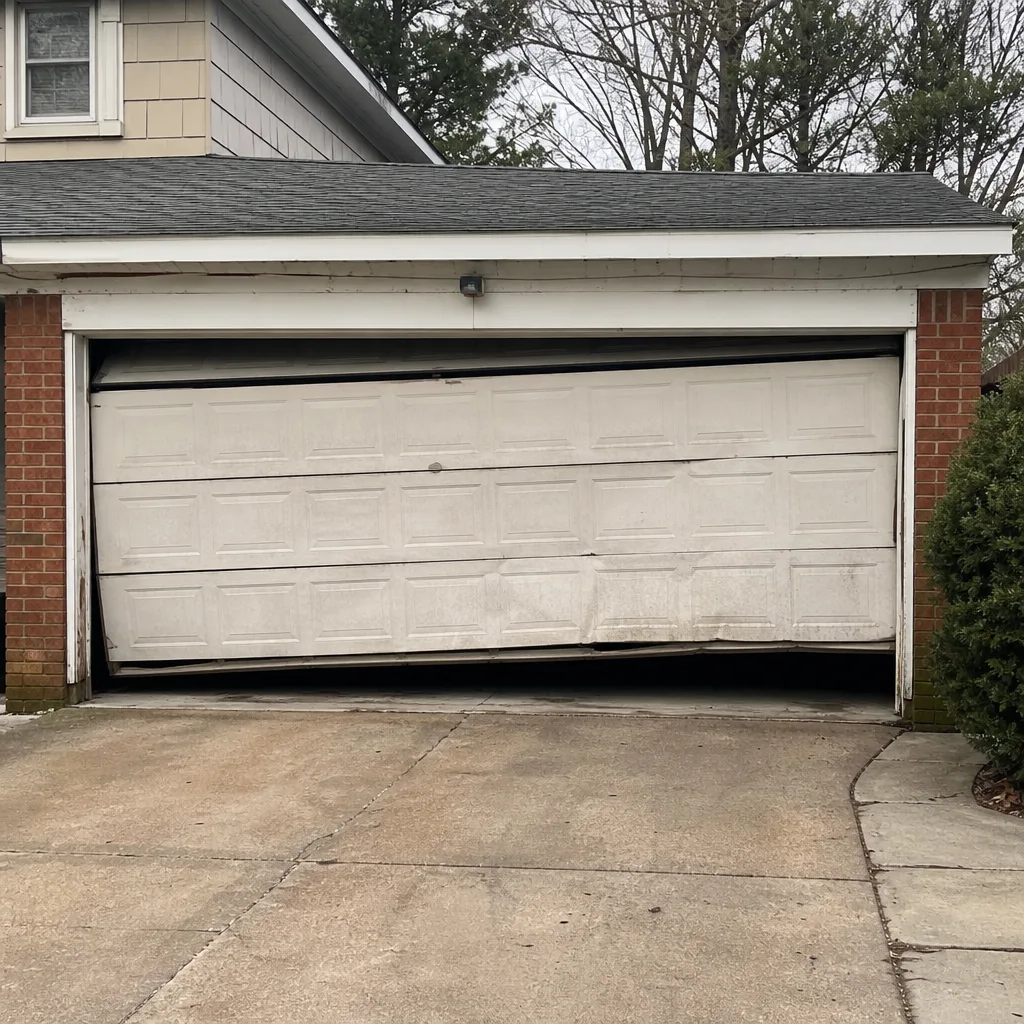 Before
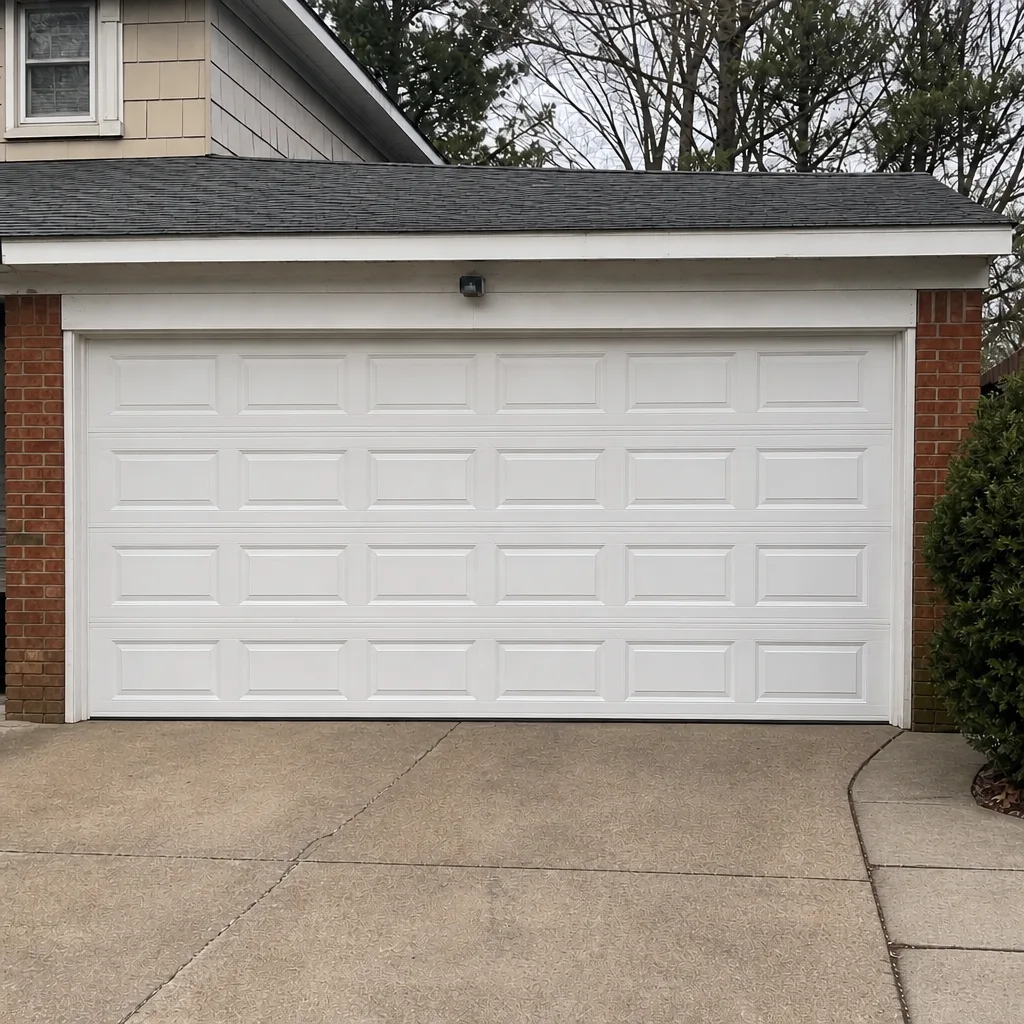 After
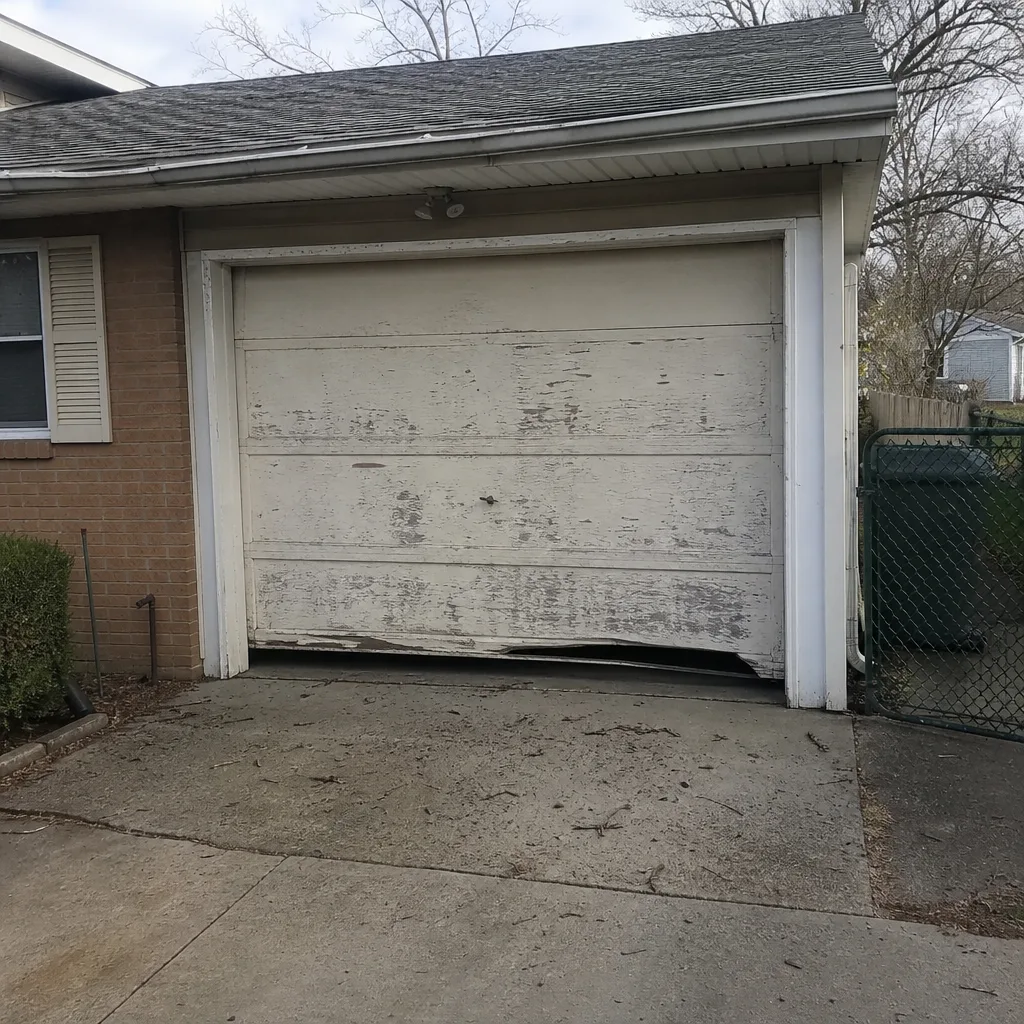 Before
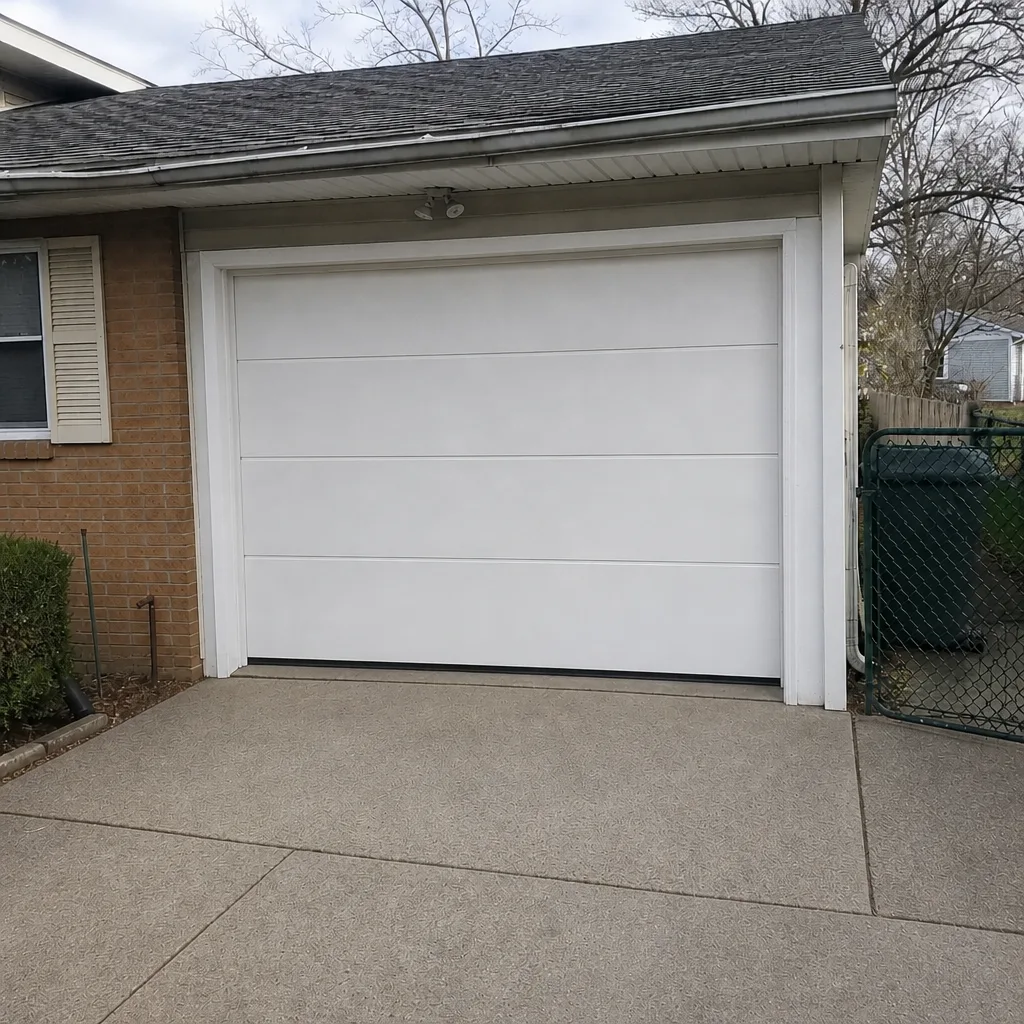 After
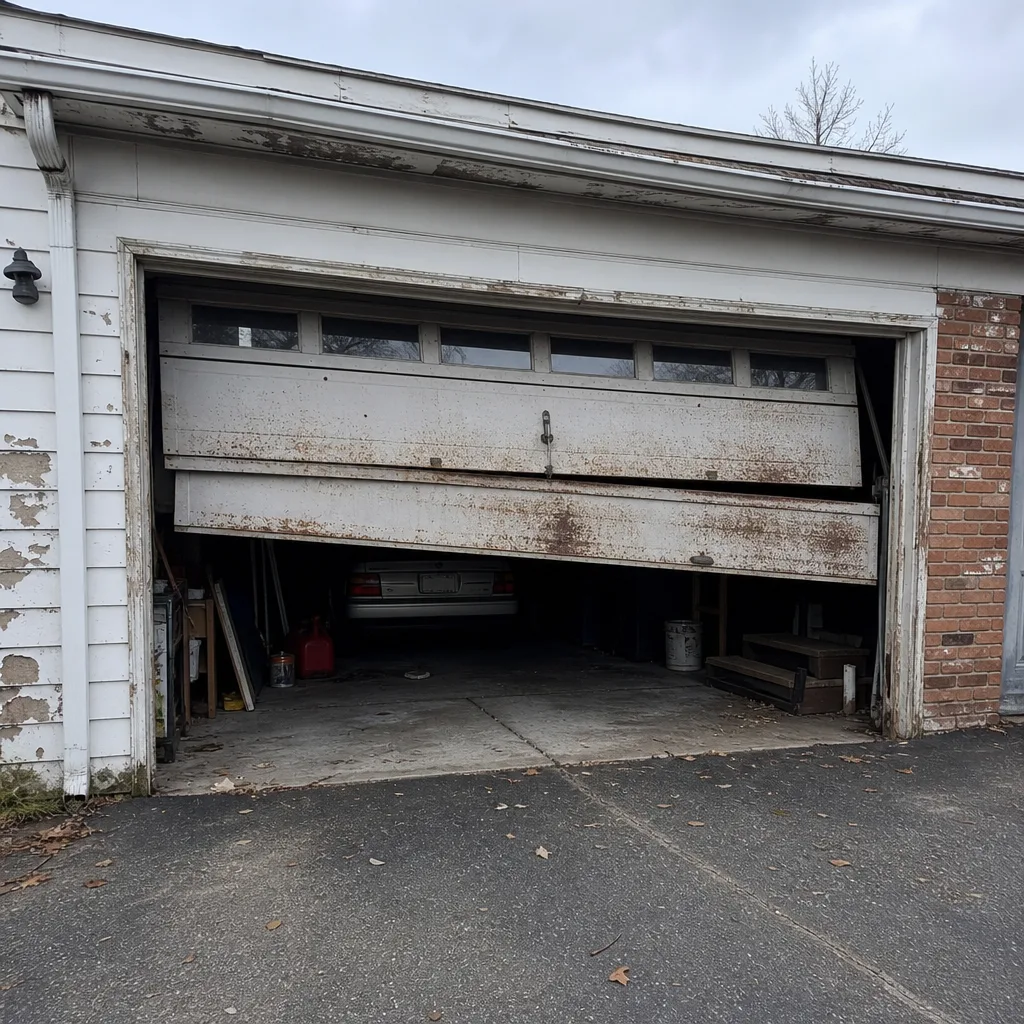 Before
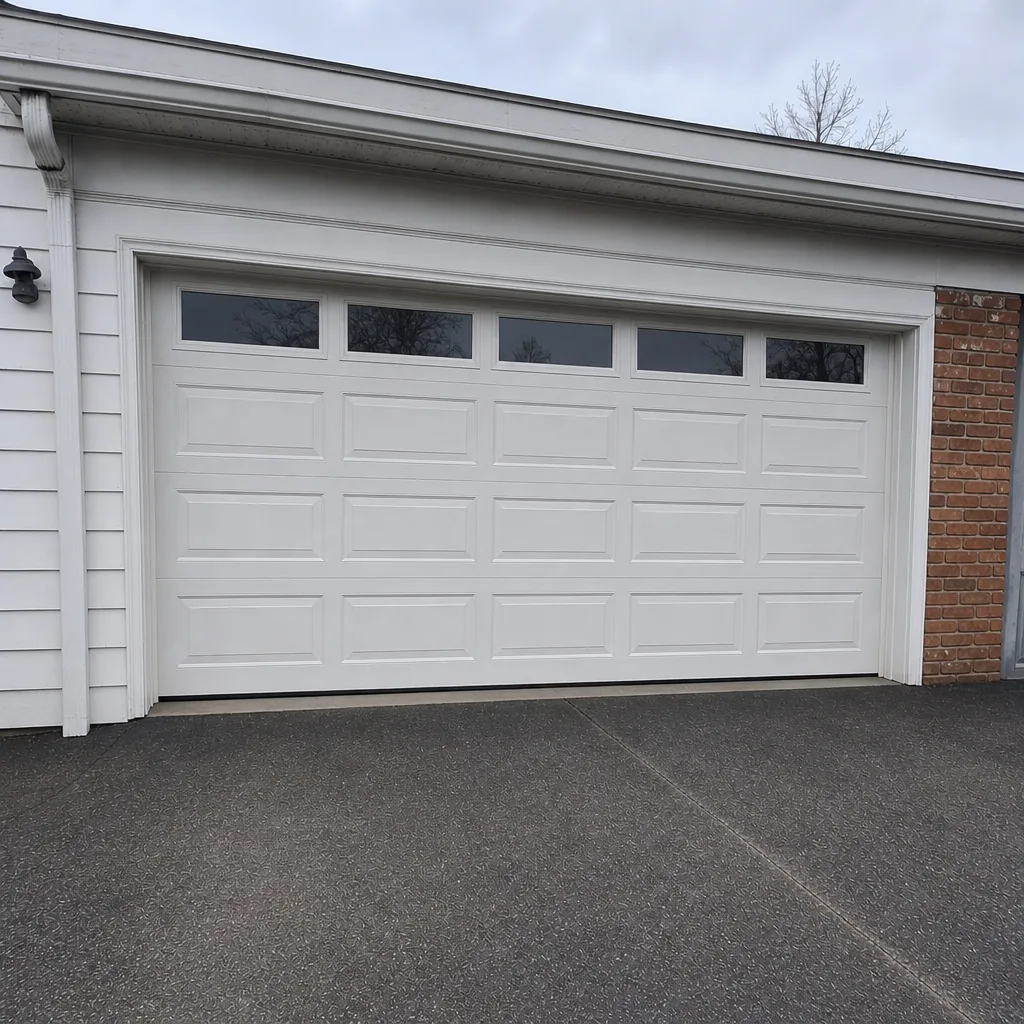 After
When to Call a Professional
Some garage door problems are safe to check yourself. Others need a trained technician, full stop. Call a professional if a spring or cable has broken, the door has come off its track, the opener is straining or making grinding noises, the door is off balance even after a manual release, or you’ve been through a storm and the door isn’t sitting level in its frame. If you’re not sure whether a problem is serious, that’s also a reason to call – a quick check is cheaper than a failed door. Edison Garage Door Repair Co offers free estimates in Edison – call (855) 658-5248. We answer 24/7, with fast dispatch from 7am to 7pm, Sunday through Friday.
Frequently Asked Questions
Pull the red manual release cord with the door fully closed, then lift the door by hand. The key is starting with the door down; pulling the release on a raised door can cause it to fall. If the door won’t lift easily or won’t stay up, stop and call a technician.
It’s smart to have one given how often storm outages hit the area, but it’s not required. If you install one, know that the battery is rated for a limited number of open-close cycles on a full charge, so it’s meant for short outages, not indefinite use.
Wind ratings matter more for homes near flood zones or exposed lots than for a door tucked behind other buildings. Check your door’s existing rating first, and ask the local building department about any requirements for your address before replacing a door.
Don’t touch it. Keep everyone clear, don’t run the opener, and don’t try to push the door back into place. Call a technician – track repair is routine for a professional and dangerous to attempt by hand.
No. Torsion and extension springs are under heavy tension, and a broken spring can still be loaded with force. Spring repair by hand is the most common source of serious garage door injuries. Leave it to a trained technician.
Spring repair is priced per spring based on the door’s size and spring type, and a written estimate is set before any work begins. Call (855) 658-5248 for a free estimate – we’ll tell you what your door needs and what it costs.
The Bottom Line
Being ready for a garage door emergency in Edison comes down to a few things: know where the manual release is and how to use it with the door closed, keep a battery backup working if you have one, check your door’s wind rating before storm season, and never force a door that’s off track or has a broken spring. A few minutes of preparation twice a year prevents most of the situations that turn an inconvenience into a real problem. And when something does go wrong, call a trained technician. From a broken spring to a brand-new door, we work on the brands already in your garage, and we’re ready to help.
Call (855) 658-5248 for a free estimate. We answer 24/7. Fast dispatch from 7am to 7pm, Sunday through Friday, closed Saturday. Same-day service is available for emergencies, and the price is always confirmed in writing before any work starts.
Written by the team at Edison Garage Door Repair Co.